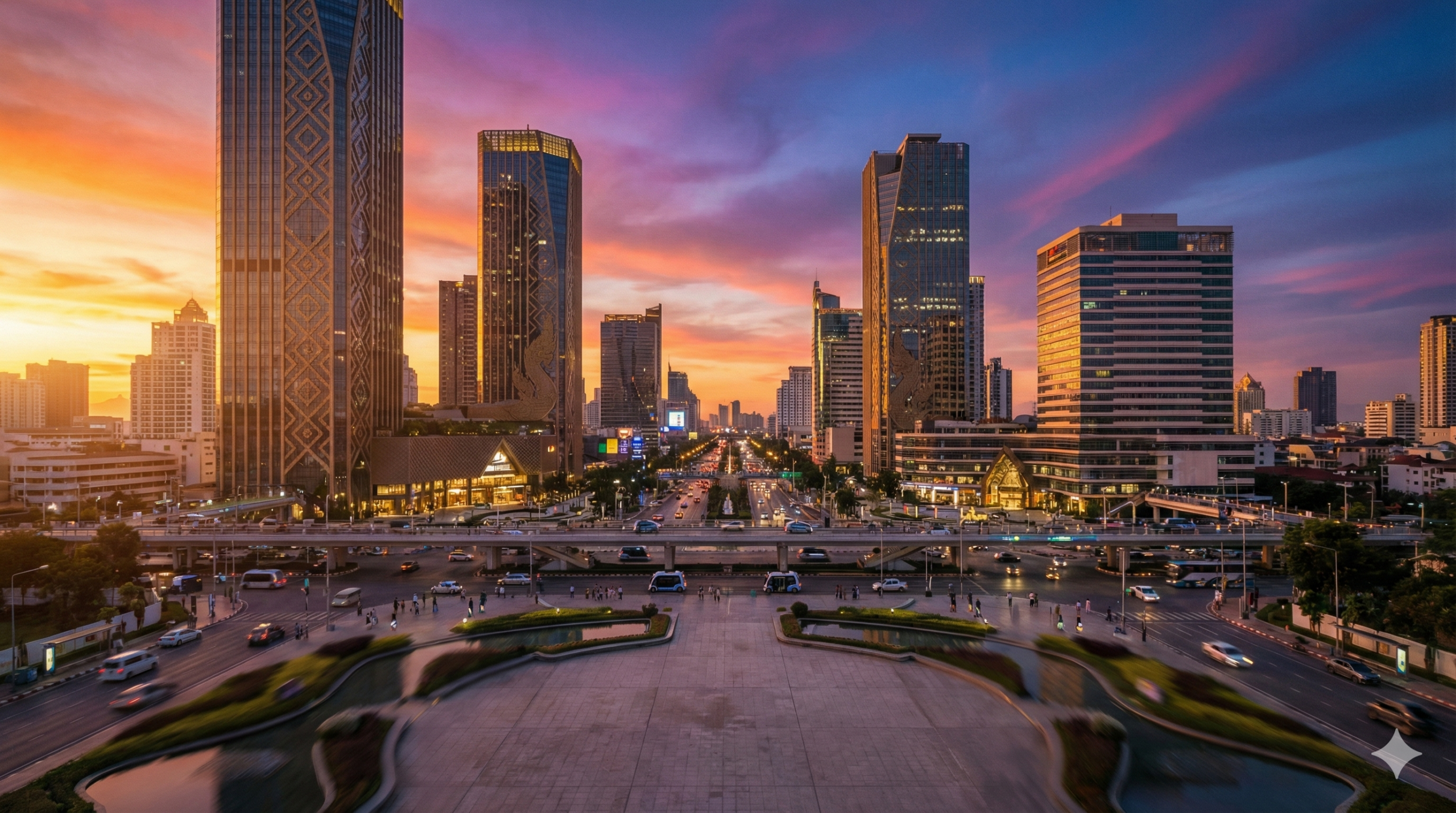
Over the past few years, the franchise market in Bangkok and major metropolitan hubs has reached a high-pressure saturation point. Brands are facing skyrocketing rents, rising labor costs, and an ever-increasing number of competitors fighting for the same shelf space.
For franchise owners today, the vital question isn’t “Should we expand?” but rather “Where and when?”
As we look toward 2026, a significant shift is occurring. Thailand’s regional provinces—specifically high-potential “Tier 2” cities—are emerging as the definitive answer for the next phase of sustainable growth.
1. Bangkok is Saturated; Regional Markets are Wide Open
Most franchise brands share the same headaches: prime locations in Bangkok are nearly impossible to find, and when they are available, the rent is astronomical. This leads to higher initial investments with diminishing returns.
In contrast, regional economic hubs offer vast “white space” for growth. There is significant untapped consumer purchasing power and a high demand for established brands. Local investors are actively searching for brands with proven systems, yet they often lack direct access to these opportunities.
2. Local Investors: High Capital & Ready to Decide
One of the greatest advantages of regional expansion is the quality of local investors. These individuals often:
- Act as direct decision-makers, bypassing the red tape of corporate boards.
- Possess deep “insider” knowledge of local consumer behavior and the best real estate.
- Prioritize long-term stability over short-term speculation.
For a brand, this is the perfect chance to secure Master Franchisees or Area Developers who are capable of opening multiple units in a short timeframe.
3. Potential Cities are Growing Faster Than You Think
Cities like Udon Thani, Khon Kaen, Chiang Mai, and Hat Yai are no longer just “secondary cities”—they are thriving economic powerhouses.
Udon Thani, for instance, serves as a strategic gateway to Laos, Vietnam, and the CLMV group. By entering these markets in 2026, brands can establish a “First-Mover Advantage” and build brand loyalty before the competition catches up.
4. Roadshows & Regional Expos: The Ultimate Litmus Test
Instead of risking a full-scale branch opening blindly, smart brands are using regional franchise expos as a strategic tool to:
- Test market appetite with real-time feedback.
- Meet face-to-face with serious local investors.
- Assess site potential across different zones. In just a few days, a brand can gather enough data to refine its entire regional strategy.
5. 2026: The Year of Strategic “Regional Expansion”
Consumer behavior and investment trends all point to one conclusion: future growth is regional. Brands that start planning today will secure better locations at lower costs and build stronger relationships with local partners.
Expansion into the provinces is no longer just an “option”—it is the core strategy for survival and growth in 2026.
Conclusion Sustainable franchise brands are those brave enough to look beyond the capital city and enter new markets before the crowd. 2026 is your window of opportunity. Finding the right “platform” to connect with real regional investors will be the ultimate key to your long-term success.